One Pipeline, Every Conversation: Lead Management in Katalyst Hub
See how Katalyst Hub brings website, social media and email inquiries into one pipeline with customer context, lead ownership and connected scheduling.
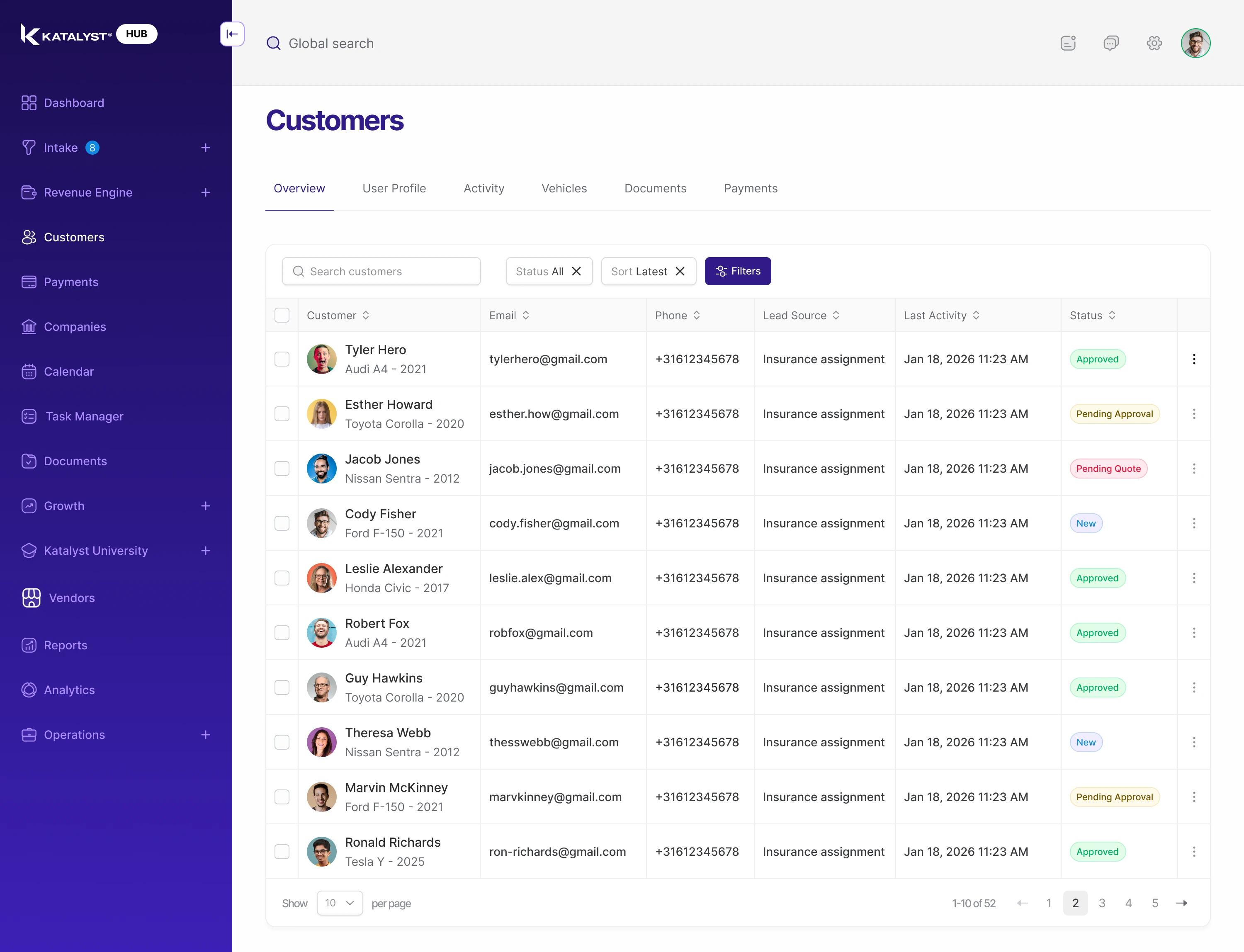
The next repair can begin on a shop's website, in a social media chat or through email. Katalyst Hub brings those inquiries into one lead pipeline, giving the team a connected view of the conversation from first interest to a scheduled customer drop-off.
Lead management in Hub is more than a list of names. Customer and vehicle details, ownership, lead status and recent activity sit together so staff can understand the opportunity and continue the conversation. The pipeline gives the front desk a shared place to work as inquiries become bookings.
A lead record with customer and vehicle context
Hub brings the customer, vehicle, lead owner and latest activity into view together. That context helps the next staff member understand the conversation when they pick it up, whether the customer is asking about a repair or ready to discuss a drop-off.
The lead owner shows who is responsible for moving the conversation forward. Status and activity show where the opportunity stands. Together, these details give the team a more useful view than a contact name on its own.
The connection with Customer Management also places lead activity within the broader customer relationship. The first inquiry is the beginning of the repair experience rather than a separate list the shop has to reconstruct later.
Table and pipeline views for the way your team works
Hub supports table and pipeline views so staff can review leads in the format that suits the task. The table brings records together for review, while the pipeline makes progress through lead stages easier to see.
A new inquiry, a contacted customer and a conversation moving toward scheduling each need different attention. The pipeline keeps that progress visible across the team's work, making it easier to spot conversations that still need a reply and customers ready for the next step.
Scheduling connected to the customer
When the conversation turns into an appointment, Katalyst Calendar supports setting schedules, assigning users and connecting customer accounts to appointments, including customer drop-offs.
That connection carries the customer context into the schedule. The team can move from discussing the work to organizing the visit within Hub, keeping the appointment close to the relationship it belongs to.
Task Manager supports reminders and recurring tasks alongside the team's daily responsibilities. These tools help keep the work around customer conversations visible as the front desk manages both new opportunities and today's repairs.
Visibility into the opportunities becoming repairs
Hub Reporting gives the shop a view of leads and conversion alongside repair value, cycle time and revenue. Those measures connect the incoming conversation with the wider performance of the business.
Katalyst Hub brings lead capture, customer context and scheduling into the same platform. The team gets a clearer view of every opportunity, and the customer gets a more connected experience from first message to arrival. Book a demo to see how Hub fits your shop's lead workflow.